
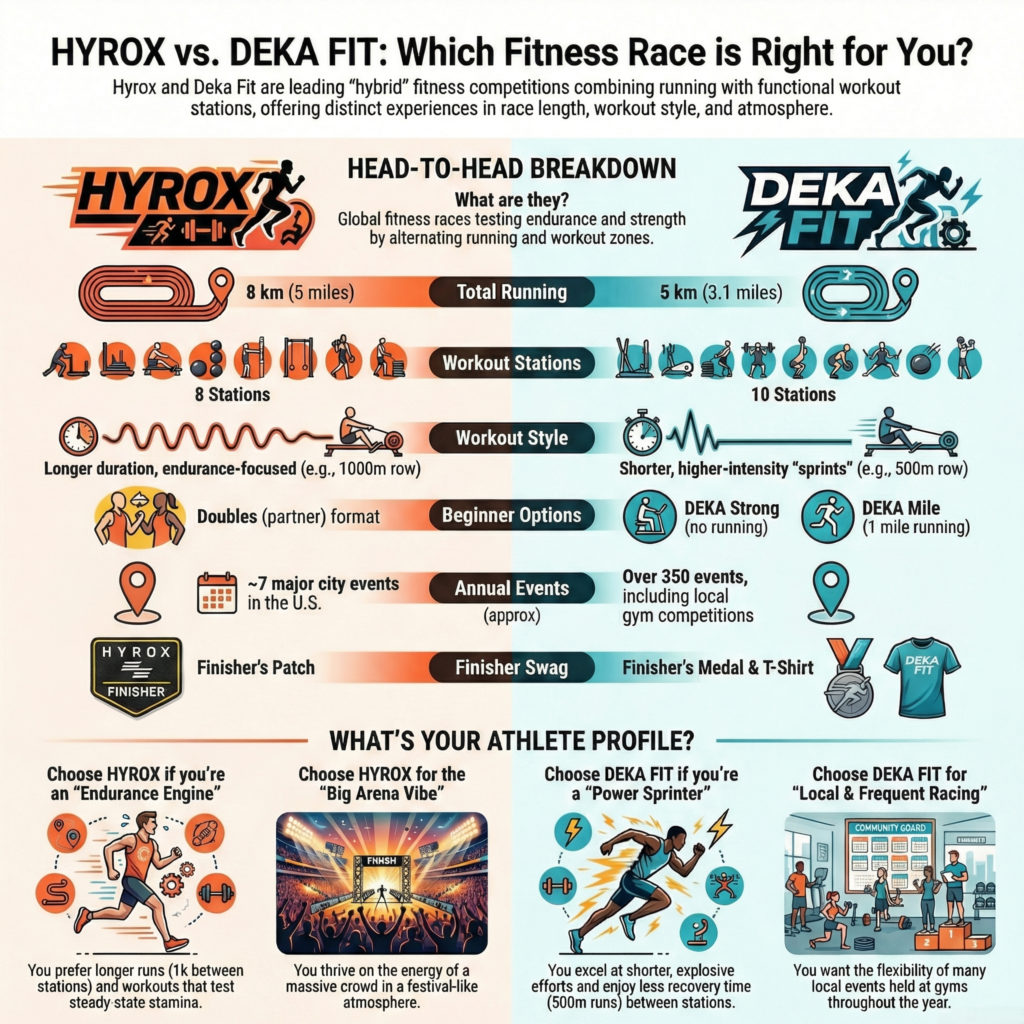
Yes, the debate is served, Hyrox vs Deka.
The world of functional fitness is booming, and leading the charge are two giants: HYROX and Spartan DEKA. These “hybrid” races—combining running with functional workout stations—have captured the attention of athletes everywhere.
As their popularity explodes, new competitors eventually face the same tough question: “Which one is right for me?”
It’s easy to get lost comparing lists of workouts and finisher times, but the answer isn’t simple. The biggest differences aren’t just about the specific exercises or how long the race takes. The real differences lie in the subtle details of race strategy, the event atmosphere, and the core philosophy behind each competition.
Forget the elite leaderboards for a moment. Here are five surprising truths that will help you decide which starting line you should aim for first.
1. The “Easier” Race is Often the Smarter Start
It’s tempting to want to sign up for the biggest, baddest challenge immediately. But the strategically smarter choice for a debut might be the race that is perceived as “less difficult.”
Defining “Harder”
Based on athlete feedback and raw data, HYROX is widely considered the tougher race. The numbers back this up: HYROX features 8 kilometers of total running compared to DEKA FIT’s 5 kilometers.
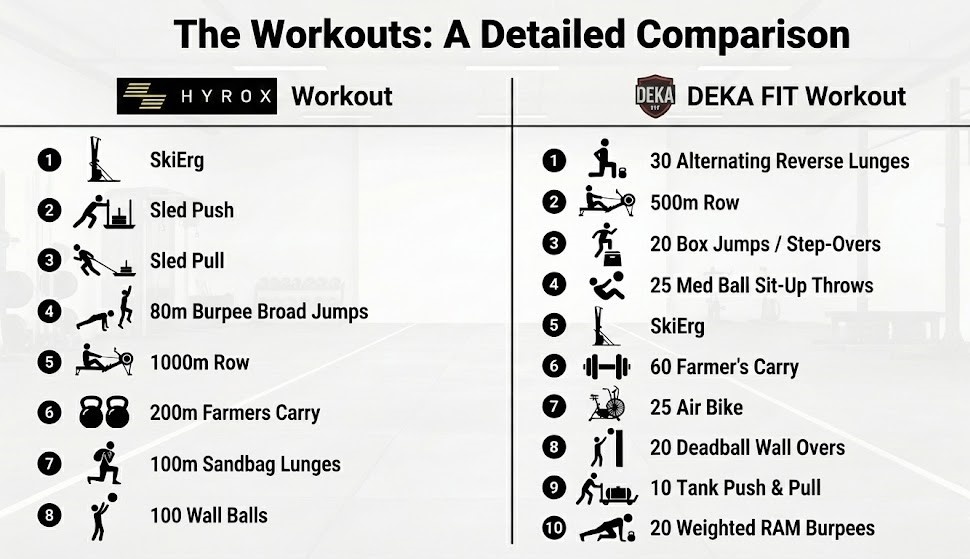
The stations in HYROX are also designed for longer duration and heavier loads. For example, the HYROX SkiErg and Row stations are double the distance of DEKA’s. Furthermore, HYROX includes uniquely brutal challenges like heavy sled pushes and pulls that humble even experienced athletes.
- Related: Curious about just how heavy those sleds are? Check out The Definitive Guide to Official HYROX Weights.
The Case for DEKA Accessibility
Despite being generally less grueling, DEKA’s greatest strength is its beginner-friendliness. The series offers three distinct levels:
- DEKA Strong: Zero running, just the 10 fitness zones.
- DEKA Mile: 160 meters of running between zones.
- DEKA FIT: 500 meters of running between zones (a 5k total).
This tiered system provides a clear entry point for all abilities. While DEKA involves controlled movements, some HYROX stations present a significant technical hurdle for novices.
The Takeaway: DEKA’s lower barrier to entry makes it a far more approachable option for the average person, allowing you to build confidence before tackling a larger event.
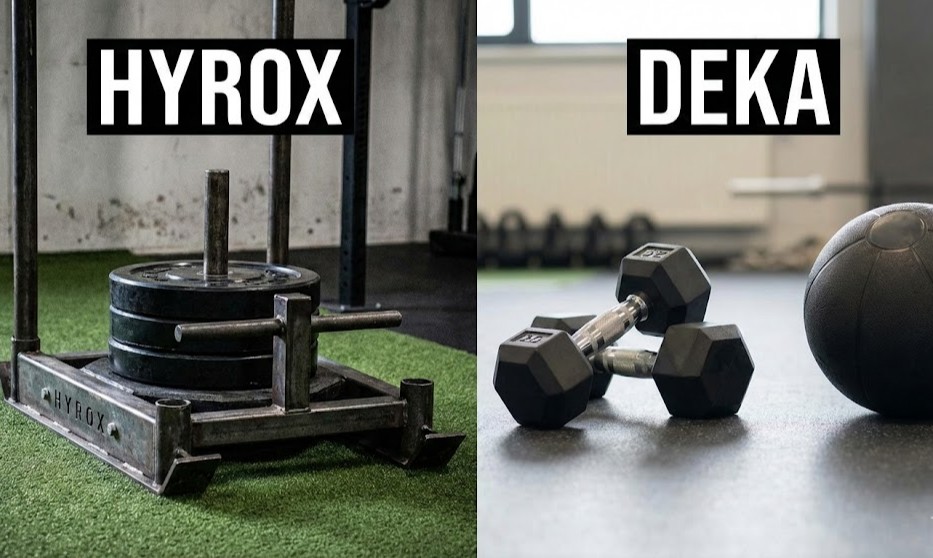
2. Atmosphere: The Coliseum vs. The Rock Concert
One of the most surprising differences is how these events handle spectators—a detail that fundamentally changes the race vibe.
The DEKA “Coliseum”
DEKA events are typically designed with spectators positioned around the outside of the competition floor, often looking down from above. This creates a “coliseum” effect. The benefit is a very controlled course where athletes can focus without interference, ensuring the zones remain standardized at every event.
The HYROX “Festival”
HYROX takes the opposite approach, placing spectators inside the running track. This creates an electrifying “music festival” energy where fans are just feet away from you.
The trade-off? Accommodating crowds inside the track means HYROX courses can be more variable and sometimes chaotic. You sacrifice a perfectly controlled environment for immersive energy. As fitness coach and competitor Josiah Novak describes it:
“[At] HYROX you feel like you’re in an actual sporting event. You’re almost like at a soccer game and your fans are right next to you cheering you on… if you’ve done a HYROX and I’m running around and people are cheering and they’re screaming, I pretend it’s all for me dude.”
The Takeaway: Do you want a controlled, predictable competition (DEKA), or a high-energy, immersive spectacle (HYROX)?

3. Pacing Philosophy: Are You a Tortoise or a Hare?
Beyond the specific exercises, the fundamental design of each race favors a different type of engine. Your personal strength—endurance or power—will heavily influence which event feels more natural.
The HYROX Engine
HYROX is built for the endurance “tortoise.” It favors athletes who can settle into a rhythm and maintain steady intensity for over an hour. The 1000-meter runs between stations are long enough to allow for some recovery, but the stations themselves are grinding efforts that take several minutes to complete.
- Related: Two of the toughest stations that test this endurance are the Wall Balls and the Burpee Broad Jumps. Learn how to master them here: A Comprehensive HYROX Wall Balls Guide and Master the Burpee Broad Jump.
The DEKA Sprinter
In contrast, DEKA is for the powerful “hare.” Its structure favors a high-intensity “sprint approach” with minimal recovery. The shorter runs force a quick transition back into work. DEKA’s stations are designed to be completed rapidly—often in under a minute—rewarding explosive bursts of power.
The Takeaway: Choosing the wrong race for your athletic type can lead to a frustrating performance. Assess whether you are built for long, sustained effort or short, explosive bursts.
4. Defining Value: The Experience vs. The Bling
How you define “value for money” plays a huge role in which event feels more rewarding.
The HYROX Experience
With a higher entry fee, HYROX positions itself as a premium experience. You are paying for the scale of a professional sporting event, high production quality, and that unforgettable atmosphere.
The DEKA Haul
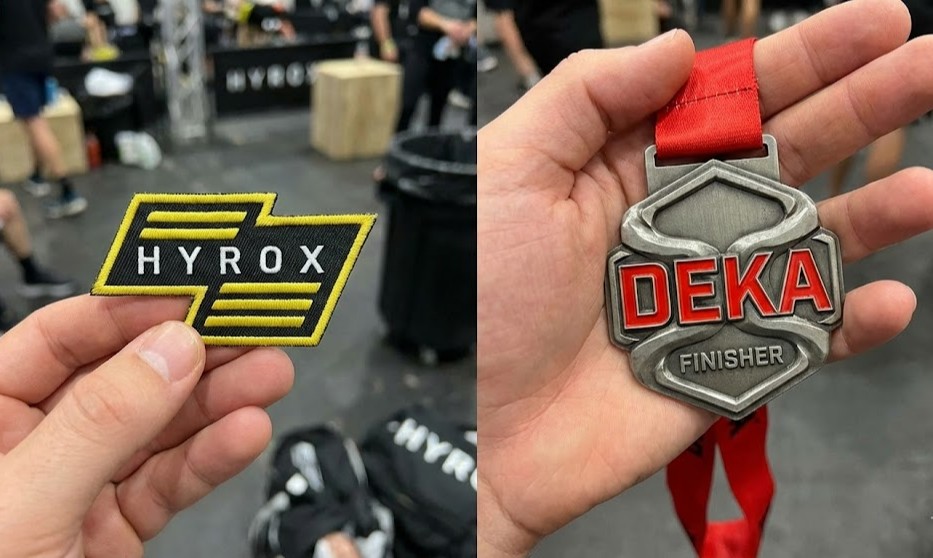
DEKA’s value proposition is rooted in accessibility and traditional race rewards. Its entry-level events are much cheaper. For that price, every competitor receives a finisher medal (which connects to other Spartan medals) and a t-shirt.
The host of the BTN Adventures YouTube channel starkly summarized the difference regarding HYROX’s rewards:
“…on the other hand at HYROX after murdering yourself for Two Plus hours you’re gonna get awarded with a nice little finisher’s patch… I was highly disappointed when they handed me a freaking patch.”
The Takeaway: If you value a large-scale, immersive event as the reward, HYROX delivers. If you prioritize a lower cost of entry and want tangible “bling” to commemorate your effort, DEKA is the obvious choice.
5. The Elite Strategy: Stop Choosing and Start Combining
After comparing all the differences, the single most impactful truth is this: the best athletes don’t choose one over the other. They understand that the two series are complementary parts of a complete training strategy.
The Synergy Strategy
Look at the leaderboards, and you’ll see elite hybrid athletes excelling in both circuits. They use the shorter, more intense DEKA format to hone power and speed, while using the grueling HYROX format to build endurance and mental grit.
The most effective strategy for the rest of us is to use the frequent, local, and accessible DEKA events as benchmarks to prepare for the larger, more demanding HYROX events.
Josiah Novak outlines the ideal strategy for year-round training:
“Honestly use DEKA FIT as a segue into the longer event which is HYROX, and then the longer event gets you even better at the shorter event. These athletes that you see winning all these events, a lot of them are the same people.”
- Related: Training for HYROX often requires specific gear that DEKA gyms might not have. If you’re stuck, check out these guides on how to Train for HYROX Sled Pull Even Without a Sled and the best SkiErg Alternatives.
The Takeaway: This synergistic approach is the pro-move, transforming a simple choice into a comprehensive, year-long training philosophy.
Conclusion: What’s Your Starting Line?
Choosing between HYROX and DEKA isn’t about finding the “best” race—it’s about finding the best race for you right now.
Your decision depends on your current fitness level, your athletic strengths, your budget, and what you ultimately want to get out of the experience. Do you seek a controlled competition or an immersive festival? Are you a steady tortoise or an explosive hare? Do you value the experience or the bling?
The beauty is, there’s no wrong answer. Both HYROX and DEKA offer an incredible opportunity to test your limits and join a thriving global community. Now that you know the real differences behind the hype, which starting line will you be stepping up to first?